


 06 Mar 2009

One of Kent's finest gardens, Hole Park in Rolvenden, has a well deserved reputation for fantastic spring colour and the most amazing display of bluebells and tulips can be seen throughout the gardens and woodlands.
Taking a walk through the bluebells is a very special experience that brings people back year after year to see the never ending haze of blue and smell the wonderful fragrance that fills the air. A new circular walk with all weather paths makes access to the bluebell spectacular even easier for all visitors.
Every year head gardener Quentin Stark adds something new to the established gardens to delight visitors. This year is no exception and Quentin has replanted the sundial garden with over 6000 tulip bulbs to provide a burst of colour in April and May. The varieties planted include the salmon-pink 'Fantasy' which has green stripes on its petals, the apricot coloured 'Beauty Queen' and the pale pink 'Candy Club' which has up to six cup-shaped flowers per stem. This will be followed by varieties of peony and well loved old fashioned and English roses including Rosa mundi which has pretty stripy pink, purplish flowers and Gertrude Jekyll with its double, deep pink flowers. A new lime green border has also been planted in the millennium garden. A new ha-ha wall has also been built giving uninterrupted views from the front of the house over parkland to Rolvenden's windmill.
The Beech hedge along the Camellia walk has been newly underplanted with the blue flowering Muscari 'Cantab' which flowers in early spring, followed in late spring by the allium 'Purple Sensation' which has purple globes of flowers on 2 foot stems. The spring colour is so spectacular that owner Edward Barham extends the opening of his gardens during spring. The Gardens will open every day for the spring and bluebell spectacular between Sunday 12 April and Sunday 10 May 2009, from 11am to 6pm.
The gardens first open on 1 April 2009 and visitors in early spring will be rewarded with a fine display of blossom, flowering magnolia, camellia, daffodils and narcissi and banks of pale blue scillas and primroses.
“We have created a new circular walk through the woods this year with all weather paths and new bridge. There is also improved access with a hard track leading to the bluebells ensuring disabled access in all but the most adverse conditions.” said Edward Barham.
After the tulips and bluebells, the gardens continue to blossom with rhododendrons and azaleas which create a showy display of colour. Also in May the standard wisterias in the Vineyard garden come into their own.
Large areas of Hole Park are dedicated to wildflowers and during spring the nodding heads of the fritillary flower and wild orchids can be seen. For the rest of the season the gardens are open Wednesday and Thursday afternoons from 2pm to 6pm starting from 1 April until the end of October and Sundays from April 5 to 28 June and again on the following Sundays 11, 18 and 25 October and Bank Holiday Mondays 13 April, 4 May and 25 May 2009.
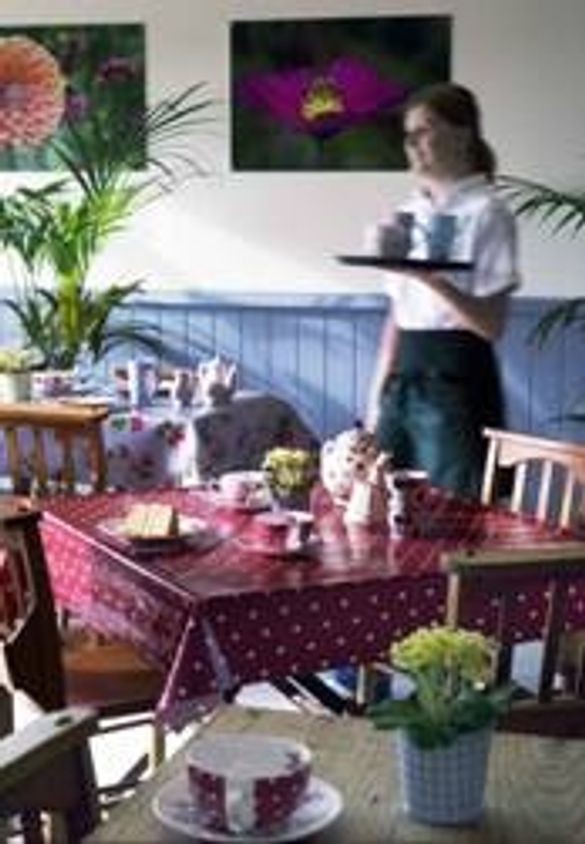
Light lunches and afternoon teas with homemade cakes are available from the coach house on Saturday, Sunday and Bank Holiday Monday during the bluebell and spring spectacular. The restored and now working turret clock mechanism in the coach house is a popular feature enjoyed by visitors. Afternoon tea is available on all other openings. A plant stall will operate next to the tea rooms and visitors can buy homemade jam and honey produced from the fruit and bees on the Hole Park estate.
The website has further information about Hole Park with a picture gallery showing images taken throughout the seasons www.holepark.com. Telephone 01580 241 344/241386 for details.
Admission is £5.00 for adults and 50p for children. Season tickets are available for £20 and your first visit is also refunded if you buy a season ticket after your first visit. Free tickets to Hole Park can also be downloaded from the Visit Kent website for Sunday 5 April as part of Kent's 'Big Day Out' promotion.
Hole Park is situated 4 miles west of Tenterden on the B2086 between Rolvenden and Cranbrook. Follow the AA signs for the spring and bluebell spectacular.
-Ends-
Notes to Editors
A family owned estate, Hole Park has been owned by the Barham family for the past four generations. The gardens manage to combine formalised gardens with natural woodland. They cover some 15 acres and were developed, laid out and planted by Colonel Barham, the great-grandfather of the present owner, in the years between the two World Wars. Hole Park is now owned and managed by Edward Barham, and much of what can be seen today is due to the contribution made by Edward's father, David Barham, who has looked after the estate for the past 45 years and still takes an active interest in its future today.
The garden is renowned for beautifully clipped topiary and great yew hedges which provide shelter for the lawns and splendid borders. The walled garden contains mixed borders, pools and a water garden. Marvellous climbing plants also provide a fine display here. The natural garden has bulbs, azaleas, rhododendrons and flowering shrubs.
There is a woodland bluebell walk and, in the autumn, the foliage colour is spectacular. Hole Park has many fine trees and the garden is surrounded by superb parkland with wonderful views across the Kentish Weald. Formal gardens surround the house. Walls and yew hedges, which are a particular feature of Hole Park, shelter broad expanses of lawns. Clipped entirely by hand, it is claimed that nowhere in the county can yews be seen trimmed to greater precision. Fountains and a swimming pool, the egg pond, the walled rose garden, herbaceous borders and wrought iron gates all contribute to make a series of gardens within a garden, united by the lawns, while outwards there are lovely views of the Weald over the surrounding 250 acres of finely timbered parkland.
At the rear of the house, beyond a beech hedge measuring six feet thick and 12 feet high, lies the Policy, massed with daffodils in April with its heathers, flowering trees and shrubs, banks of rhododendrons and its azaleas. Amongst the trees can be seen collections of birch, juniper, cypresses and fine oaks. Rhododendrons, camellias, magnolias and primulas are all here in abundance and further plantings are now being made to adjoining woodla.
For more information, to arrange a visit or request photographs, contact Caroline Edmunds at Pennington PR on 01892 616647 or e-mail caroline@penningtonpr.com