
 20 Jan 2026

Indoor air quality expert reveals everything homeowners need to know about humidity in the home and provides insights, tips & tricks on banishing condensation, damp and mould, drying laundry and even improving heating efficiency.
As we settle into the harshest of the winter months, rain, snow and freezing temperatures will both directly and indirectly be playing havoc with the air quality in our homes.
Cranking up the heating, drying laundry indoors, closing windows and blocking draughts or air vents in an attempt to keep warm through the colder weather will all be contributing to moisture build up indoors, whilst blocked gutters and drains, burst pipes or faulty seals on windows and doors, for example, can cause water to make its way into our homes.
“Humidity in the home can have an enormous impact on both a building's and our own health,” says Noel Fok, indoor air quality expert and CEO & co-founder of EcoAir, leading manufacturer of air treatment products.
“It's so important – particularly in the winter months and especially in the already very humid climate of the UK – to be aware of moisture levels in our homes so that we can protect our properties and those that live in them.
“Reducing indoor humidity can be as easy as opening windows and doors daily to allow trapped moisture to disperse and escape, but for more serious cases, there are a number of other simple steps we can take to restore humidity to healthy levels.
“If all other measures fail a dehumidifier can provide a fast and effective solution for tackling troubling cases of condensation, damp or mould. Bringing instant results, they are portable, affordable, and energy efficient.”
For anyone concerned about moisture levels in the home or looking to better understand humidity, indoor climate control in winter, or dehumidifiers, read on for Noel's expert guide to humidity and how to address it…
What causes humidity in the home
Many of us are largely unaware of the main sources of moisture in our homes.
Frequent hot showers and baths make bathrooms naturally one of the most humid spaces in the home (two thirds of a household's water is used in the bathroom). Humidity in the bathroom is often made worse by a lack of proper ventilation or absence of windows, especially in the case of ensuites.
Kitchens are another culprit in contributing to moisture build-up, thanks to water vapour generated from the use of dishwashers, kettles, boiling water taps, and even cooking.
High rainfall, leaking pipes, blocked drains or gutters, rising damp, moisture in construction materials, faulty seals on door or window frames, deficient damp proof courses, obstructed vents, blocked gaps or even draught excluders, can all contribute to an accumulation of excess moisture in the home. As can air drying laundry indoors – especially if hanging it on the radiator.
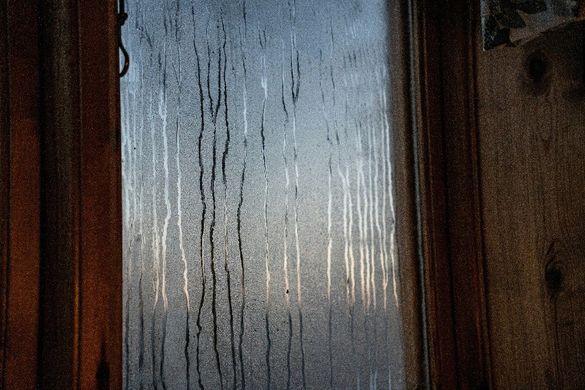
Heating your home too much can also contribute to moisture buildup. It's a common misconception that turning the heating up will reduce humidity, however, warm air carries more moisture and humid air in a warm interior creates the perfect environment for microbes to thrive and will also cause condensation issues as the warm air settles and condenses on colder surfaces, such as windows or walls.
Even humans contribute to humidity – the more people breathing and perspiring in the household, the more moisture you'll be creating!
Telltale signs of humidity in the home
The signs of excess moisture in your home include:
- Condensation build-up (especially in the mornings)
- Musty odours
- Appearance of mould or mildew
- Rotting wood or peeling paint
- Difficulty heating the home
- Yellowish-brown water stains or fluffy white salt deposits on walls
- 'Tide-lines' along the bottom of basement or ground floor walls
- Increase in allergic reactions, asthma attacks, respiratory problems or skin infections
Any one or more of these issues and it is likely your home is suffering with high humidity.
How to measure humidity
You can easily measure moisture levels using a hygrometer. These are widely available online and are inexpensive to buy.
Take readings throughout the day in different rooms and areas. These readings will provide a clear picture of the overall humidity conditions and help identify which areas might need attention and in what order.
It's worth checking typical problem areas to understand the severity of moisture levels in the home, including:
- Built-in wardrobes and cupboards, especially those backing onto external walls
- Understairs storage spaces
- Rooms with poor ventilation
- Areas with windows that are not well insulated or ventilated
Optimum indoor humidity levels are between 40-60 per cent, so if yours are above this, you'll be well advised to address the issue.
How to address humidity
There's no need to stop bathing or cooking up a storm in the kitchen, but when you do, be sure to ventilate. This is the first and most important step to tackling humidity in the home.
Ensuring good air flow is essential, so identify any areas where air might be being trapped and open windows and doors regularly, creating cross-ventilation (or a through-draught) if possible, to allow excess moisture to escape quicker. This is just as important through the winter months when moisture is even more likely to get trapped indoors as we close our homes off to protect from the elements.
Avoid air-drying laundry inside the house, especially over radiators, and be more moderate with the heating to reduce the risk of condensation.
Extractor fans can be a noisy nuisance, but using them when cooking or after taking a shower or bath – as well as opening windows where possible - is important to help reduce humidity and its ensuing issues.
For a more immediate, affordable and controlled solution, a dehumidifier can successfully restore and maintain the correct moisture levels in the home. A desiccant model will also eliminate any microorganisms that pass through the unit due to its internal heat, so doubles up as an air purifier for added peace of mind. A further bonus of desiccant dehumidifiers is the heat they emit as they operate - a welcome byproduct as outdoor and indoor temperatures drop.
What is a dehumidifier and what problems do they solve?
A dehumidifier is a small, portable and affordable appliance that extracts excess moisture from the air quickly and effectively, lowering humidity levels in the home.
Excess moisture in the air can lead to an array of issues, the main ones of course, being a build-up of condensation, damp, or mould. These problems will then inevitably cause damage to home furnishings, décor or structural issues, which can be costly to fix, but at their worst, can make people living in the household unwell.
Airborne microorganisms thrive in humid conditions. The survival and breed rate of bacteria, viruses or dust mites, for example, will escalate as soon as humidity levels rise above 60 per cent RH, so once an infection is brought home by any member of the family, excess moisture present in the air will increase the risk of everyone else in the house becoming infected.
Once humidity levels in the home are brought down to below 60 per cent RH, airborne bacteria, viruses and other microbes will not only stop breeding, but will struggle to survive.
A humid environment can also aggravate existing inflammatory conditions such as asthma, eczema or arthritis, and can trigger numerous allergies, whilst homes exposed long-term to excess moisture have a much higher chance of harbouring lung-damaging and sometimes highly toxic mould.
Damp laundry can contribute to excess moisture in the air as the water evaporates, especially when drying wet clothing over radiators, which speeds up the evaporation process. Using a dehumidifier offers a fast and low-cost indoor laundry drying option when weather conditions prevent us from hanging laundry outside.
How does a dehumidifier compare to a tumble dryer for drying laundry?
From a cost-saving perspective, dehumidifiers are far cheaper to run than power-hungry tumble dryers, so are a great solution for air drying laundry indoors during colder, wetter weather.
They offer an excellent solution for air drying clothes indoors quickly, efficiently and cost-effectively, whilst also protecting from the excess moisture build up that is generated as water evaporates from damp laundry loads. Many modern models now include a dedicated “laundry”, “turbo” or “drying” mode for this purpose.
All you need to do is place a dehumidifier next to your clothes airer. The dehumidifier will directly extract the moisture from the clothes and the air, leaving your laundry bone dry in just a few hours and the air in your home, healthier.
A desiccant model will also provide an additional heat source and eliminate any microorganisms that pass through the unit due to its internal temperature.
Dehumidifier types: Compressor vs desiccant
Compressor and Desiccant dehumidifiers work and perform quite differently.
A desiccant dehumidifier draws air into the machine and passes it over a desiccant wheel to absorb the moisture from the air. Desiccant dehumidifiers are recommended for any spaces where the ambient room temperature is likely to fall below 15 degrees Celsius as its performance will remain consistent at temperatures as low as 1°C.
Compressor dehumidifiers use a fan to draw in air and run it over a cold coil (much like a refrigerator) so that the water condenses and is collected by the water tank. A compressor dehumidifier will become less effective as temperatures fall but can be a better choice for warmer spaces.
Compressor dehumidifiers are very effective at maintaining the recommended household atmosphere between 45-50 per cent RH, but if you want to manage your home at a lower humidity level, then a desiccant dehumidifier is likely to be the better option.
Here is a quick comparison between Desiccant and Compressor dehumidifiers:
- Noise level - Desiccant dehumidifiers are quieter than compressor dehumidifiers
- Ambient Temperature - Desiccant dehumidifiers work well in ambient temperature range between 1 to 40 degrees Celsius. Compressor dehumidifiers only work well between 18 to 35 degrees Celsius.
- Weight - Desiccant dehumidifiers are much lighter. For example, a 7.5L per day desiccant dehumidifier is equivalent to a 12L per day compressor dehumidifier, but the weight is 6 Kg vs 12Kg respectively.
- Power Consumption - Desiccant dehumidifiers will generally consume slightly more energy compared to compressor type, however a desiccant dehumidifier will also extract moisture at a faster speed than a compressor, therefore it is debatable as to whether a desiccant dehumidifier is more expensive to run.
- Turbo or Laundry mode - Most desiccant dehumidifiers come with a turbo function where it literally doubles up its power when you need faster moisture extraction - in the case of a flood, for example, or if you want to dry your laundry using the dehumidifier. This function is designed to be used on a need basis rather than for everyday use. Compressor dehumidifiers do not have turbo modes.
Choosing the right dehumidifier
The most important thing when deciding upon which dehumidifier will best suit your needs is to determine room size, alongside the humidity levels in your space. The larger the space and the higher the humidity, the larger the dehumidifier and the higher the extraction rate.
As a general rule, we would recommend a 12-litre compressor or a 6-litre desiccant model for a small 2-bedroom house, depending on your typical room temperatures.
A 10-litre compressor or a 5-litre desiccant dehumidifier would generally be sufficient for a small 2-bed flat.
You might want to consider a compact option or a wall-hung model where floorspace is lacking.
In the case of large spaces or those with bigger humidity issues - particularly if addressing humidity in damp areas such as garages or basements - you will want a larger and more powerful model.
For a bathroom you'll need a water-resistant dehumidifier, with a high IP rating (IP24), as no others are safe for bathroom use.
Room temperature is also an important consideration as different dehumidifiers work optimally at different temperatures.
- A desiccant dehumidifier is recommended for any spaces where the ambient room temperature is likely to fall below 15 degrees Celsius, as its performance will remain consistent at temperatures as low as 1°C. It will also emit heat, doubling up as an additional heat source, so can be a good option for unheated rooms or for winter months.
- A compressor dehumidifier requires a minimum working temperature of around 18°C to operate optimally and will become less effective as temperatures fall, so can be a better choice for warmer spaces/months.
Noise levels may also be a key consideration. Dehumidifiers can create a background hum, which may not be ideal for a bedroom or quiet office for example, however, desiccant models benefit from much quieter operation than compressor units at levels as low as 33dBA, so if noise is an issue, check before you buy. So as long as the moisture levels you're tackling aren't too severe, a smaller, quieter dehumidifier will likely suit best in quiet spaces.
What size dehumidifier do I need?
There are no real issues with having a dehumidifier that is too big for your needs apart from the appliance perhaps being noisier than a smaller/less powerful model. A good dehumidifier should power down automatically once optimum humidity levels are reached, so if you're unsure, always size up.
If a dehumidifier is too small for your space, or not powerful enough to tackle the humidity levels, it will overwork itself, using more energy, causing excess wear, requiring more repairs, and ultimately leading to a reduced lifespan. It will also be unlikely to achieve optimum humidity levels so won't be serving its purpose.
The best way to purchase the right size dehumidifier for your needs is to speak to the manufacturer.
Do I need more than one dehumidifier?
Given the portability of dehumidifiers, multiple appliances should only be needed for larger spaces, those with more severe humidity issues, especially poor airflow, or areas that are prone to moisture buildup and house delicate items and artefacts such as books, or vintage cars for example.
Larger homes with several different floors could benefit from 2-3 smaller dehumidifiers if humidity is an issue throughout to reduce moisture levels quickly and without having to move the appliances from floor to floor.
Likewise, if humidity levels vary from space to space, separate units can work at different levels to balance the overall humidity.
You might want a few small units if you have a number of wardrobes built against an external wall as these can be especially problematic.
Other spaces that are particularly prone to moisture build up include basements, cellars, utility rooms, warehouses, garages, mobile homes, and boats. These could benefit from multiple appliances to tackle the issue quicker or with targeted dehumidification by problem zone – especially if showing signs of damp or mould.
Larger, more industrial sized dehumidifiers are also an option for areas with more severe moisture problems.
Is there a risk of over drying the air?
To avoid the risk of overdrying the air, look for a dehumidifier that has overdry protection built in.
Energy saving technology will also ensure the maintenance of optimal moisture levels by shutting down automatically when ambient humidity reaches the desired setting and restarting as moisture levels rise again.
Dehumidifier energy usage and running costs
Whilst dehumidifiers will inevitably consume energy and add to electricity bills, modern household units don't use a lot of energy, running at around 300-700 watts - similar to a small fridge.
Choosing a model with energy-saving technology, auto-stop functions and smart controls can further minimise power consumption, optimising performance and energy efficiency by shutting down automatically when ambient humidity reaches the desired setting, or switching between full power, economy and standby modes, so it's important to look out for these features.
Dehumidifiers also stand out as an answer to rising energy costs. It's harder to heat moisture-laden air, so lower humidity levels allow for significantly cheaper heating during winter months, whilst dehumidifiers with a laundry mode can be especially cost-effective when air drying laundry indoors quickly in place of running a tumble dryer, offering savings of between £50 and £250 a year on running costs alone for an average of three laundry loads a week.
Desiccant dehumidifiers will use a little more energy than compressor models, but extract moisture quicker, so will need to operate for shorter periods. Ultimately, you'll need to weigh up running costs alongside your other dehumidification needs.
Top tips to minimise energy usage
- Improve air circulation: Good ventilation is the first and most basic of steps to addressing excess moisture in the air. Keep doors open between rooms to support your appliance and help humidity balance naturally.
- Size matters: Match the capacity to your space and dehumidification needs by choosing the right size appliance. If in doubt, size up, as any good dehumidifier should power down automatically once optimum humidity levels are reached, but a dehumidifier that's too small will overwork itself, using more energy, causing excess wear, requiring more repairs, and ultimately leading to a reduced lifespan.
- Use smart settings: set humidity to around 45-55%. Lower targets will make the unit work harder than necessary. Auto modes will ensure the dehumidifier powers on only when needed, whilst a timer can limit operation (and running costs) to the periods of the day when humidity might be most problematic.
- Keep filters and coils clean: To ensure optimum performance and efficiency, maintenance is key. Wipe down and clean filters in accordance with your user manuals.
How long should a dehumidifier be left on for?
How long you run your dehumidifier will depend on the size of the space you are trying to dehumidify and initial and desired humidity levels.
High humidity – anything above 60 per cent RH - will require a dehumidifier to run for several hours to bring humidity back to optimum levels. Likewise, the larger the space, the longer it will take to address moisture levels.
Most modern dehumidifiers, however, benefit from integrated hygrometers and automatic power saving features that cycle the machine on and off without you needing to worry about monitoring humidity levels or powering off manually. This way, the dehumidifier can be left on continually, offering both peace of mind and convenience.
Emptying the water tank
The frequency of emptying the tank will depend on the size of the tank, the extraction rate of the dehumidifier, and the air moisture levels being addressed. The higher the humidity, the smaller the tank and the faster the extraction, the sooner you'll have to empty.
For average household use, once daily or even less frequently should be sufficient, but if you're drying laundry loads on turbo mode, for example, you may need to empty more frequently.
Most dehumidifiers will shut down automatically when the tank is full so there's no need to worry about spills or overflow.
And many models come with a continuous hose that can be used to remove the need to empty the tank altogether.
Continuous drainage option
Using the continuous drainage feature on a dehumidifier is hugely convenient as it removes the need to manually empty the water tank. It also allows the appliance to continue working uninterrupted when left unattended instead of powering off when the water tank gets full which ultimately leads to more consistent humidity control.
Combine continuous drainage with smart features that automatically sample air moisture levels, powering the appliance down when optimum levels are reached, and on again when humidity rises, to maximise energy efficiency.
Dehumidifier care and maintenance
- Filters, air inlet and outlet: Clean your air filters and remove any dust around the air inlet and outlet periodically – ideally every 2 weeks.
- Water tank: Many dehumidifiers now benefit from anti-bacterial water tanks that prevent mould build up, but if yours doesn't, it can accumulate mould or mildew over time if left unchecked. Aim to clean it at least once a month using washing up liquid and air dry before returning it back to the dehumidifier. Take extra care to avoid cracking the tank or dislodging any minor mechanical parts whilst cleaning.
- Continuous hose: If you use the continuous hose, it should be cleaned once a month. After unplugging your appliance, remove the hose to clean the connection mouth on the dehumidifier, and flush out any residues inside the hose. Air dry the hose before reinstalling it. If the hose has accumulated mould and it cannot be easily reached for cleaning, you are advised to replace the hose.
- Exterior panels: Clean the exterior panels by wiping with a damp cloth to remove dust and stains. Make sure you unplug the mains socket first.
END
Notes to editors:
- Please contact the EcoAir PR team at Rooster should you wish to test/review any EcoAir products
- Rooster can coordinate comment, interview and profile opportunities for EcoAir CEO & co-founder, Noel Fok
For further press information:
Elsa Findlay | Julie Aguilera
Rooster PR
T: +44 (0)20 3440 8930
About Noel Fok:
Noel Fok is a mechanical engineer, CEO and co-founder of EcoAir.
At the forefront of the air purification industry, EcoAir manufactures and supplies a range of innovative and environmentally friendly air treatment products. Noel is the designer behind several of the brand's top-selling products and has been instrumental in the development of EcoAir's desiccant technology.
Noel's commitment to improving indoor air quality and ensuring that home or work environments are optimised to foster good overall health and wellbeing, has also seen him spearhead the launch of the world's first air steriliser, the EcoAir Anti-Covid® AVS. Representing the next generation in air purifier technology, the EcoAir AVS is designed to significantly reduce the risk of contagion of airborne viruses and bacteria, including COVID-19.
In his spare time Noel enjoys playing golf and spending time with his dog, Luna.
About EcoAir:
Founded in 2006 by Noel (CEO) and Sally Fok (Managing Director), EcoAir manufactures and supplies a range of innovative and environmentally friendly air treatment products.
Designed for use in the home, workplace or commercial spaces, the EcoAir product range includes dehumidifiers (offering the largest range of desiccant dehumidifiers in the UK), portable air conditioners, fans, air purifiers, and this year sees the introduction of an all-new industry category with a world-first air steriliser: the EcoAir AVS.
EcoAir is a brand synonymous with cleaner, fresher air. Its mission is to improve indoor air quality to ensure that everyone feels comfortable in their home or work environment and that the climate of living or work spaces is optimised to foster good overall health & wellbeing.
EcoAir is continually innovating in both design and service, always striving to improve products, maximise the practical benefits they offer, and ensure a seamless and positive customer experience.
Consistently delivering both on quality and performance, EcoAir dehumidifiers are award-winning. Most recent accolades include Good Housekeeping Institute 2024, Which? Best Buy 2024 and Indy Best 2023